Facilities Management Air Filter Solutions
Sales revenues are
declining. Survival by reducing costs is a way of life.
Companies are decreasing staff and delaying capital equipment
purchases. The result? Greater burdens on building and facility
managers, who still need to keep their building systems running at
peak efficiency -- all as cost effectively as possible. On top of
this, the responsibilities of the facility manager has expanded due
to greater corporate focus on cost restraint and operational
efficiency, coupled with government regulations. As expenses
are scrutinized, HVACR systems represent a significant percentage
of capital costs and operating expenses. Large energy-using
systems, such as chillers and cooling towers, can translate into
significant annual savings or losses depending on how well they are
maintained. Ultimately, HVACR systems generate an estimated
25 percent of the total energy use in commercial and institutional
buildings and play a critical roll in keeping occupants comfortable
and productive and production processes efficient.

In a
ddition to economic cuts, building and facility
managers are challenged by increased "green" building trends
including energy conservation incentives, Leadership in Energy and
Environmental Design (LEED) programs, and corporate environmental
goals. Federal energy regulations mandate reducing the
amount of carbon dioxide ("carbon footprint") and greenhouse gases
generated by power plants. The electricity needed to run
HVACR systems is generated by the fossil fuel being burned by power
plants. For every kWh used, more greenhouse gas emissions are
generated. Dirty, clogged coils and other poorly
maintained system components have a direct link to the efficiency
of cooling equipment and, consequently, greenhouse gas
emissions.
Many facility managers have learned through experience that proactive maintenance of equipment and systems saves money in the long run, reduces downtime and enables a more predictable stream of financial outlays and maintenance costs. Preventative maintenance is less expensive than reactive breakdown maintenance. Permatron offers air filtration products that will meet those needs.

A simple way to help
achieve both objectives is encouraging high quality preventative
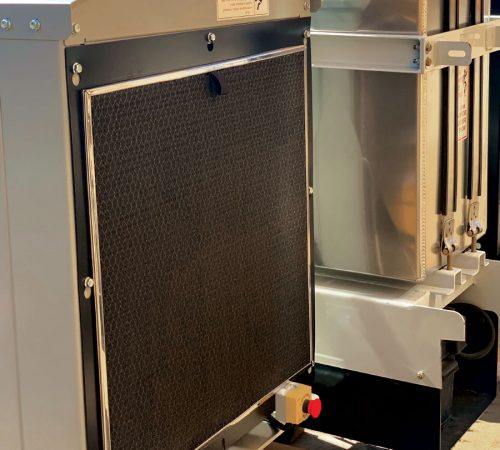
maintenance products, like our PreVentĀ® equipment protection air
filters as a way to reduce energy consumption. With EPA
research showing that as little as 0.042 inches of dirt on an air
conditioning coil can reduce its efficiency by 21%, the
installation of an air intake filter is a smart business decision
for energy efficiency reasons alone. Escalating energy use by
a dirty, airflow blocked system can be invisible because energy
bill increases occur slowly over time. For each 1
degree Celsius rise in discharge temp there is an increase in power
consumption of 1.75% and a decrease in cooling capacity of
1.1%. A dirty system runs 80% of the time fighting dirt
when it should be operating at 30% during mild weather. The
additional costs associated with labor intensive chemical cleaning
and scrubbing, potential breakdowns and replacement costs of burned
out motors or compressors simply exacerbate an already expensive
set of problems.